Now that life has changed and the girls are doing online school, I added an architectural class to their weekly work load. This past week, I asked each to write a report on a work of architecture that they each appreciate. Here is the report from Sophie Hendricks.
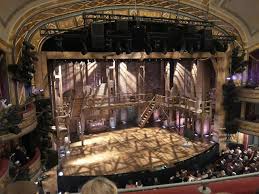
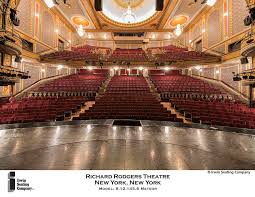
The task for this week was to pick an architect with work built in the U.S. I picked Herbert J. Krapp. He lived from 1887 to 1973. He lived for 86 years! One of his buildings is the Richard Rodgers Theatre. I picked this one in particular because it is the theatre that Hamilton plays in.
That theatre was built in 1924. The architect, Herbert J. Krapp, worked alongside Irwin Chanin. The theatre was built for Irwin Chanin. They decided to make the large theatre sloped so that everyone would be able to see the stage. They also wanted everyone to seem like equals, as Irwin Chanin, so whether you have a cheaper seat or a very expensive one, everyone comes in through the same doors. Even the people sitting in the balconies enter through the same doors. The message Irwin was trying to portray is equality. He thinks that everyone is equal. The Richard Rodgers Theatre has a white brick wall with triple-arched loggia and Corinthian columns. Irwin Chanin, and his brother Henry, built six broadway theatres in their lives. The Richard Rodgers Theatre was their first. They would have built more, but they lost control during the great depression. Three of their theatres, the Majestic Theatre, Royal Theatre, and Theatre Masque were taken over by the Shuberts. Later, in 1931, the Shuberts also took possession of The Richard Rodgers Theatre. In 1945, they sold it to City Playhouses, which is an investment group. In 1982, the Nederlander bought the theatre and renamed it to the Richard Rodgers Theater after the composer, Richard Rodgers. Before Richard Rodgers, it had been called the 46th Street Theatre.
Now that life has changed and the girls are doing online school, I added an architectural class to their weekly work load. This past week, I asked each to write a report on a work of architecture that they each appreciate. Here is the report from Hannah Hendricks.
For my assignment, I chose the Smithsonian American Art Museum. The museum is located on the National Mall in the nation’s capital, Washington D.C., and has more than seven thousand artists represented in the collection. The building, originally a patent office building, was designed by Robert Mills and taken over by Thomas U. Walter after Mills was dismissed in 1851.
Robert Mills was a nineteenth-century architect from South Carolina who is well known for designing the first Washington Monument, which is located in Baltimore, Maryland, and the monument to the first president, located in Washington, DC.
Thomas Walter was a nineteenth-century architect who is well known for being the fourth Architect of the Capitol, designing the addition of the north and south wings and central dome of the U.S. Capitol building, and being the second president of the American Institute of Architects.
One famous piece displayed in the museum is called “Electronic Superhighway: Continental U.S., Alaska, Hawaii” by artist Nam June Paik. It is a popular piece in the Smithsonian American Art Museum. Paik, the artist, is a Korean-American artist who worked with a variety of materials. His 1995 piece, “Electronic Superhighway: Continental U.S., Alaska, Hawaii” is a piece of abstract art permanently placed in the Smithsonian American Art Museum.
Construction of the original building, the old patent office building, began in 1836 and took thirty-one years to complete. The patent office building was completed in 1865. It takes up an entire city block. The original building was designed by Robert Mills in the Greek Revival style. The Greek Revival architectural movement was popular in the late eighteenth and early nineteenth centuries in northern Europe and the United States. The museum collection was moved to the old patent office building in 1968 and has been there since.
We get to do a variety of projects which keeps life interesting. This particular project wanted to bring new life to an old horse barn. The barn was already beautiful, but not “finished.” There was some repair work that needed to be done and a lot of cleaning up.
So we got to work on a plan to repair and replace the damaged elements of the structure. The plan includes updates to bring the structure to current code standards to be used as an event space. We worked on a variety of seating options and came up with a plan for being able to serve food in the space.
The interior aesthetic was maintained and we were able to reuse some of the damaged areas to enhance the space. Lighting was selected to brighten the space and allow a variety of functions.
I have wanted to start a video blog series for some time now, so this change to our normal patterns is the opportunity. Give me some grace while I figure out systems and try some things. For this discussion, I started a ZOOM chat with Jim Leaman on Solar PV on residential projects.
It turns out that Solar PV makes sense financially for every south facing unshaded roof. Jim gives a summary of how he made the decision to add solar to his house.
https://youtu.be/3dMTB96mhTs
Let me know what you think of the video. I am not completely happy with the resolution, but I think the content is strong, thanks to Jim.
Now that life has changed and the girls are doing online school, I added an architectural class to their weekly work load. This past week, I asked each to write a report on a work of architecture that they each appreciate. Here is the report from Hannah Hendricks.
Architectural Assignment 1
3 April 2020
Fallingwaterwas originally designed in 1935 as a weekend home for Edgar and Liliane Kauffman (“Fallingwater.”). Edgar was a Pittsburg businessman and both he and Liliane were avid outdoorsmen (“Edgar J. Kauffman.”). The Kauffmans owned a plot of land near Mill Run, Pennsylvania on Bear Run River that had a waterfall. They hired Frank Lloyd Wright to design a weekend home for them overlooking the waterfall. Wright designed Fallingwater, a weekend home that sat on top of the waterfall (“Fallingwater.”).
Frank Lloyd Wright was an American architect, interior designer, writer, and educator born on June 8, 1867, in Richland Center, Wisconsin. Throughout his architecture career, he designed over one thousand structures, five hundred and thirty-two of which were completed. He believed in practicing organic architecture, which is “designing structures that were in harmony with humanity and its environment” (“Frank Lloyd Wright.”). Wright was a founder of the practice. Wright was married three times and had seven children. He had many, many well-known projects and has won four different awards. He passed away on April 9, 1959, at ninety-one years old.
Today, Fallingwater is a popular tourist destination. Four and a half million people have visited Fallingwater since it was opened to the public in 1964 (“Fallingwater facts”). Fallingwater’s design “symbolizes the harmony between people and nature” (“Designing Fallingwater”). In 1966, it was granted national historic landmark status. In 1991, Fallingwater was named “best all-time work of American architecture” (“Fallingwater.”). In 2007, it was twenty-ninth on a list of America’s favorite architecture.
I like Fallingwater because it is very intricate and interesting. It has lots of fascinating layers, many balconies, and lots of angles. I think the color choices Wright made were perfect. I love the way the house contrasts with the forest and the river around it. It is very cool how the house has balconies and staircases that go right out into, beside, and over the river and pathways through the forest. The home is well designed and fits very well with its surroundings.
I am feeling run down today. What is it about having to stay home to work that wears you out? I know…. at least I have work – at least for now. I am grateful we were able to go remote quickly to protect our team’s health and still serve our clients. Just today, today feels heavy. So I was trying to think of some way to spread cheer. I started here at home by calling Sweet Joy’s Cakes and Desserts for some Cabin Fever Relief. #lovelocal
Sweet Joy’s is a family business. Their website says they cook from the heart and believe in quality when it comes to decorating and flavoring their foods. Check out their website to see some amazing creations.
The Cabin Fever Relief kit they delivered to our house brought smiles to the faces of my girls. It was just what we needed to bounce back a little from all the heavy that is these days. I feel good about supporting a locally owned small business and the girls are feeling good about having sweet treats to enjoy. I hope you will all give Sweet Joy’s a call or connect with Sweet Joy’s on Facebook to get some relief for yourself!